
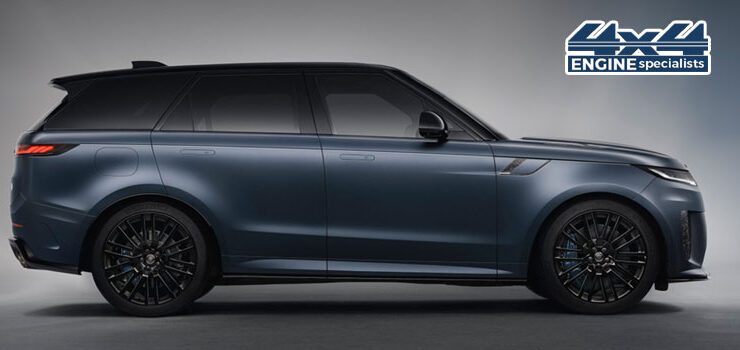
The Range Rover HSE is renowned for its luxury, innovation, and performance. Among its standout features is Adaptive Cruise Control (ACC), a system that automatically adjusts the vehicle’s speed to maintain a safe distance from the vehicle ahead. This function relies heavily on the seamless coordination between software, sensors, and the vehicle’s powertrain—especially the engine. The Range Rover 3.0 engine, known for its refinement and capability, plays a critical role in delivering the smooth and responsive behavior expected from adaptive systems in the HSE trim.
Powered by an advanced 3.0-litre inline-six engine with mild hybrid support, the HSE delivers both power and control. We explores how the Range Rover engine supports Adaptive Cruise Control operations and how reconditioned engines also offer the same reliability and integration when properly restored. We’ll break down the interaction between the engine and ACC systems, emphasizing precision, safety, and efficiency.
Understanding Adaptive Cruise Control in the HSE Model
Adaptive Cruise Control (ACC) in the Range Rover HSE is designed to automatically maintain a safe distance from vehicles ahead. Unlike conventional cruise control systems that only maintain a set speed, ACC dynamically adjusts throttle input and braking. This is especially beneficial during long highway drives or in slow-moving traffic.
The system relies on radar sensors, cameras, and engine integration to measure distances and detect changes in traffic flow. The Range Rover 3.0 engines is central to this process. When ACC commands acceleration or deceleration, the engine responds almost instantly to ensure smooth and safe adjustments. The system must rely on the engine’s responsiveness and precise torque delivery for these transitions to be seamless.
Even when using reconditioned engines, the ACC system can function optimally—provided the engine has been rebuilt to OEM standards. The engine must support all necessary communication protocols and sensor integrations to maintain the fluid control required for ACC operation in the HSE model.
The Role of the 3.0 Engine’s Mild Hybrid System in Smooth Acceleration
One of the key attributes of the Range Rover 3.0 engine is its mild hybrid electric vehicle (MHEV) system. This system enhances the engine’s responsiveness by utilizing a 48V electric motor that assists during acceleration. In Adaptive Cruise Control scenarios, this electric support smooths out any lag between the ACC system’s commands and the engine’s actual performance.
When the ACC system demands a speed increase to keep pace with traffic, the mild hybrid system adds instant torque, allowing the engine to respond quickly without jerks or sudden surges. This makes the ride feel more refined and helps maintain passenger comfort.
Reconditioned engines that include properly rebuilt or replaced MHEV components can replicate the same level of smoothness. High-quality reconditioning ensures that the electric assist and regenerative braking systems work in harmony with the ACC module, keeping the performance consistent and luxurious.
Engine Braking and Deceleration Support During Cruise Control
Engine braking is a natural way to reduce speed without relying entirely on the vehicle’s braking system. In Adaptive Cruise Control mode, the Range Rover 3.0 engine contributes to deceleration by reducing fuel injection and allowing internal friction to slow the vehicle.
This technique provides more control and preserves brake life. When descending slopes or approaching a slower vehicle, ACC intelligently uses engine braking along with actual brakes to moderate the car’s speed. The system must communicate effectively with the engine to execute these smooth transitions.
For reconditioned engines, this ability is preserved when the ECU is correctly programmed and compatible with ACC features. Even a rebuilt Range Rover engine, when restored with precision, will support the same level of integrated deceleration and braking, making it suitable for high-tech driver assist systems.
Adaptive Throttle Control for Changing Traffic Conditions
In urban or congested traffic, Adaptive Cruise Control faces a different challenge: frequent start-stop movement. The Range Rover 3.0 engine meets this challenge through its finely tuned throttle control, which allows micro-adjustments to power delivery.
The inline-six design, combined with turbocharging and hybrid assistance, ensures that the engine can ramp power up or down smoothly and accurately. These adjustments are especially noticeable during stop-and-go traffic, where ACC must restart the vehicle and maintain low speeds while adjusting spacing.
Reconditioned engines that include restored throttle bodies, recalibrated ECUs, and hybrid components maintain this precision. So long as the rebuilding process follows factory-grade procedures, reconditioned Range Rover engines remain fully capable of providing the adaptive throttle modulation needed for modern cruise control features.
Integration with Forward Collision Detection and Safety Systems
The ACC system in the Range Rover HSE is linked with forward collision detection, which uses sensors and predictive algorithms to identify potential collisions. If a threat is detected, the engine management system quickly reduces throttle input or cuts power entirely to help avoid or minimize impact.
The 3.0 engine’s electronic management system must work in real time with these sensors. Its rapid response rate and ability to quickly alter torque output play a crucial role in ensuring the vehicle reacts instantly to danger. The smooth integration between the ACC and the engine enhances overall safety and confidence on the road.
Reconditioned engines, when fitted with updated software and tested ECU configurations, can function seamlessly with these safety systems. These engines are thoroughly inspected to ensure that all electronic connections and responses are in line with safety standards.
Enhancing Fuel Efficiency Through Intelligent Cruise Modulation
One of the understated benefits of Adaptive Cruise Control is its ability to optimize fuel consumption. The Range Rover 3.0 engine, with its mild hybrid support, contributes significantly to this by reducing unnecessary acceleration and deceleration events.
By maintaining consistent engine loads and using regenerative braking, the system ensures fuel-efficient cruising. This efficiency is amplified during long highway journeys where minor throttle changes can lead to significant fuel savings. The mild hybrid system further assists by powering auxiliary components and allowing smoother stop-start functionality.
Reconditioned engines with properly functioning hybrid modules and efficient combustion characteristics can match these fuel-saving features. When rebuilt correctly, they maintain tight tolerances and electronic calibration, ensuring minimal fuel consumption while supporting ACC functionality.
Communication Between the Engine ECU and Cruise Control Modules
Behind the scenes, complex data exchange occurs between the engine control unit (ECU) and the adaptive cruise control module. The Range Rover 3.0 engine’s ECU processes throttle inputs, brake pressure, torque requests, and regenerative braking status in real time.
ACC relies on this live data to make informed decisions about vehicle speed and spacing. The ECU must not only interpret these signals quickly but also execute changes to engine performance instantaneously. The effectiveness of ACC is directly tied to how well the engine ECU responds to this continuous stream of data.
For reconditioned engines, ECU compatibility and calibration are key. During engine restoration, specialists ensure that the ECU supports the required protocols and software versions needed to interact with modern driver-assist systems. When this is done correctly, reconditioned engines offer the same reliability and responsiveness as new units.
Maintaining Comfort and Refinement in Cruise Conditions
Luxury vehicles like the Range Rover HSE are expected to deliver not just functionality but also refinement. The 3.0 engine contributes to this by offering near-silent operation, smooth power transitions, and vibration-free performance. When ACC is active, any roughness or delay in power delivery can negatively impact the driving experience.
The six-cylinder configuration, along with advanced engine mounts and noise-reducing components, ensures that the engine runs smoothly even during frequent adjustments by the cruise control system. The mild hybrid’s electric motor also reduces engine strain at low speeds, enhancing comfort.
A properly reconditioned Range Rover engine can replicate this experience. Noise-dampening materials, engine balancing, and professional tuning during reconditioning ensure that luxury and comfort are preserved. This means even with a reconditioned engine, the HSE model maintains its hallmark smoothness.